(*This was the talk I gave at the Anti-Fascist Church on October 11 of 2025 in Rotterdam)
As a philosopher my work focuses primarily on Decolonial Theory and Anti-Colonial struggle. I specialize in the works of Frantz Fanon, Aimé Césaire and Sylvia Wynter. I have translated Aimé Césaire’s ‘Discours sur le colonialism/Discourse on colonialism’ from French to Dutch, and I am currently working on a PhD at the University of Amsterdam which focuses on Black anti-colonial critique and the responses to it.
“Il faut faire peau neuve, développer une pensée neuve” is what Martinican philosopher Frantz Fanon urges us to do in the final chapter of ‘Les damnés de la Terre/The Wretched of the earth’. And I have often repeated those words in my own work. When writing about colonial history I have also often made the link between colonialism and capitalism, like many other Black theorists such as Anton de Kom, CLR James and Aimé Césaire have done before me. Because it is very clear to me that these systems are intrinsically linked, that you don’t have one without the other. In his book ‘Wij slaven van Suriname’ Surinamese author Anton de Kom argues that colonial conquerers and pillagers should be categorized as capitalists, because they essentially are capitalist entrepreneurs, and they also act according to the same market logic.
And as Guyanese historian Walter Rodney showed in his work, even the abolition of slavery in the Americas was done primarily out of economic considerations. In his seminal work ‘How Europe underdeveloped Africa‘ Rodney states: “Slavery is useful for early accumulation of capital, but it its too rigid for industrial development. Slaves had to be given crude non-breakable tools which held back the capitalist development of agriculture and industry”. As a result the northern states had more industrial benefits of slavery. So in order to expand the industrialization in the rest of the country, and advance it to a higher level of capitalism, slavery needed to be abolished. They didn’t all of a sudden, thanks to the novel ‘Uncle Tom’s cabin’ by Harriet Beecher Stowe, learn that it is wrong to enslave people. It simply made economic sense.
And yet despite focusing so much on these questions, and even researching it for a living, I was still shocked by what we have been witnessing for the past two years. And I am shocked by the degree to which I am still shocked. Sometimes shock and amazement are a good thing, and in academia and in the arts it is certainly considered a good thing to retain your sense of wonder and curiosity. But in this case the shock I felt was as a result of a disillusionment I experienced, which means that even I still had illusions about the oppressive systems we’re living under.
When I talk or write about the history of colonialism and the history of slavery I am often met with some variation of “That’s just how people thought back then”(with an implied understanding of people as white people) or “But it was normal back then” (with again the implication being that it was normal for white people, and thus simply normal). Which carries with it the implication that if they, white people, had known better, they would have done better. Because modern Europe is an enlightened continent, a continent of reason inhabited by people of reason. A reason that they then had to spread throughout the world for the betterment of all mankind. So when atrocities such as slavery, colonialism and genocides are committed by them this can only be as a result of a lack of knowledge.
These Europeans would go on to praise themselves for abolishing a slave trade that they had set up. They had done the civilized thing in doing so. “But oh, look at the Arabs who trade in slaves, look at how backwards they are”. And as such the Belgian King Baudouin would emphasize to the Congolese people that his country had colonized, how good of a job they had done of saving them from slavery. That they are lucky to have been put under the protective wing of civilized Europe, that shielded them from barbarism. This Europe would strip away the rights colonized women had had in their cultures, stigmatize them from not performing Western Bourgeois notions of femininity, but then congratulate themselves for liberating these very women. How lucky were they now that Europe was here to protect them from the violence of primitive colonized men. The other is inherently barbaric thus trades in slaves, the other is inherently violent thus subjugates women. The European is a man of reason. Any violence and atrocities that were committed by them was because “it was normal back then”. If they had known better, they would have done better.
The problems with this line of thinking is obvious. Saying that “it was normal back then” is to already participate in colonial discourse. It begs the question ‘Normal to whom?’ Was slavery normal for the enslaved person trying to flee the plantation, fully knowing what the consequences were if caught? Was colonialism normal to Algerians protesting and fighting French colonial rule, and then being drowned in the Seine river as a result? Was the colonial logic normal to the Simba rebels fighting the Belgian attempt to put in place a system of Neo-colonialism in the Congo? To say “It was normal back then” is to accept a colonial logic that only sees Europeans as humans.
As the work of Jamaican philosopher Sylvia Winter shows, this fact of seeing Europeans as humans first and foremost is a constant factor in European history. In European discourse Man was first conceptualized as a religious being, homo religiosus. The Other is conceptualized as a non-Christian heathen, in opposition to Christian man. Subsequently Man is conceptualized in political terms, homo politicus. Now the Other is irrational, a savage in opposition to Civilized Man. Finally Man is conceptualized in biological, and Social-Darwinian terms. And this time the Other is the racially inferior non-white, the Native and in the case of Black people they are the n-word in opposition to racially superior white Man. The way the Other is conceptualized changes, but Man is always a European man.
Contrary to what we were taught European history is not one of progress where they do a bad thing, learn from it and then do better. Otherwise with all of the atrocities that were committed during slavery and colonialism we would expect them to be geniuses now. After all, they would have gained knowledge from the genocide that was committed in the Congo during the rule of King Leopold II, from the Great Bengal Famine of 1943 in British-India, and from the Sand Creek Massacre in which Cheyenne and Arapaho people were killed during the American Indian Wars, many of whom were women, children and elderly. Yet with all of this knowledge that should have been gained, during the past few years when I looked at the people that now should know better, none of them did any better. And the shock I felt, makes me think about the degree to which I had internalized this idea and had this expectation that “if they knew better, they would do better”. It made it clear to me that decolonization is an ongoing process. Now, after two years of witnessing a genocide in 4k, Fanon’s words “Il faut faire peau neuve, développer une pensée neuve” gained a deeper meaning to me.

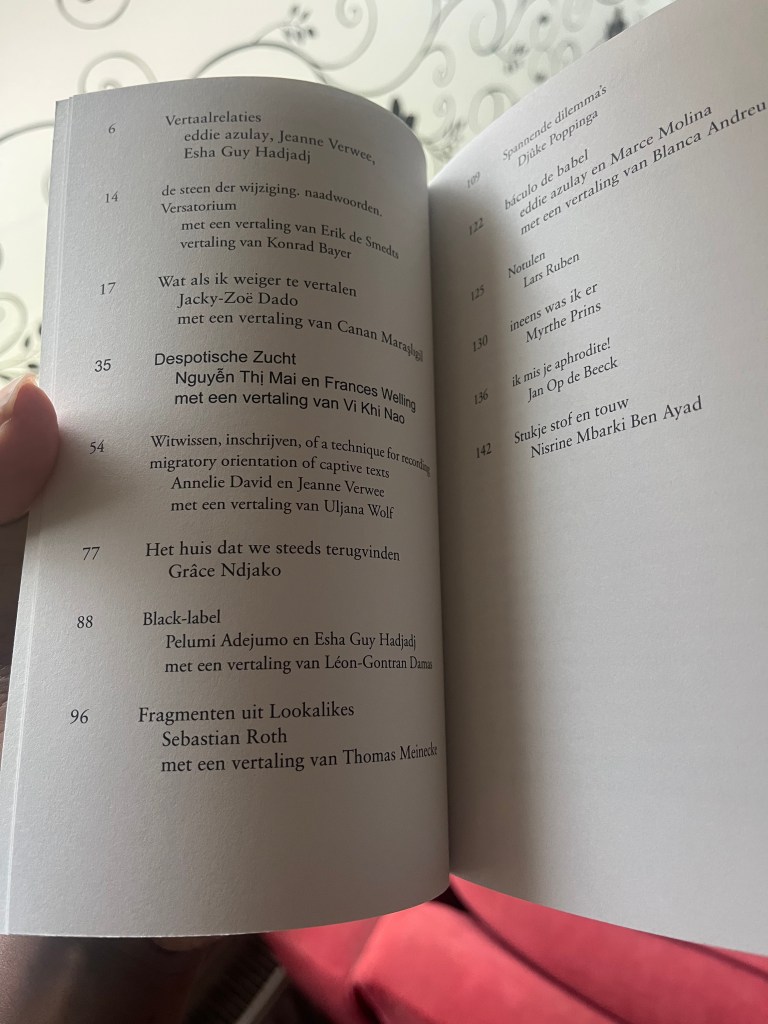


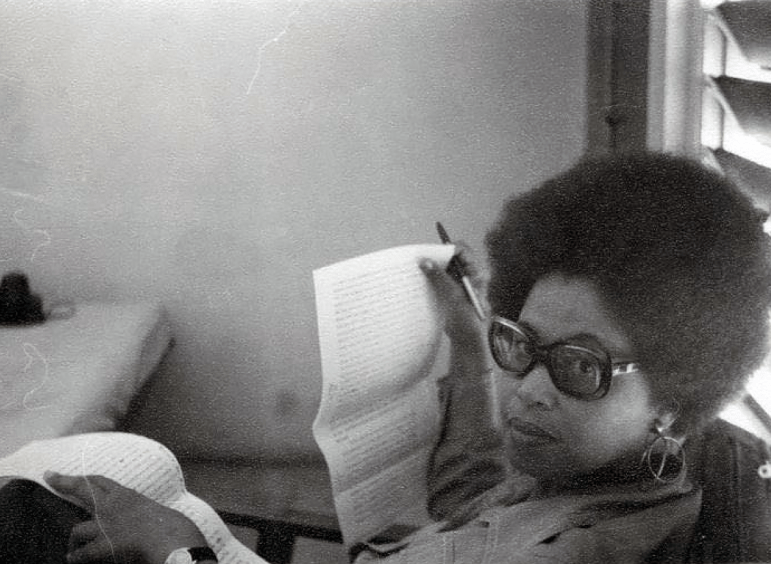

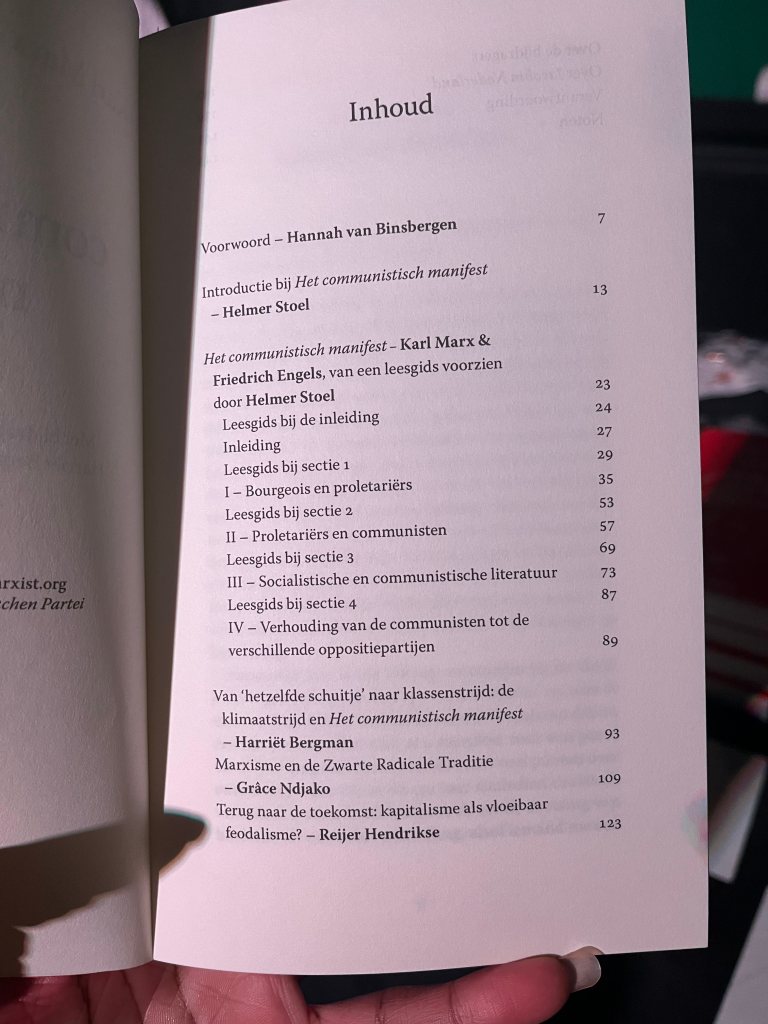
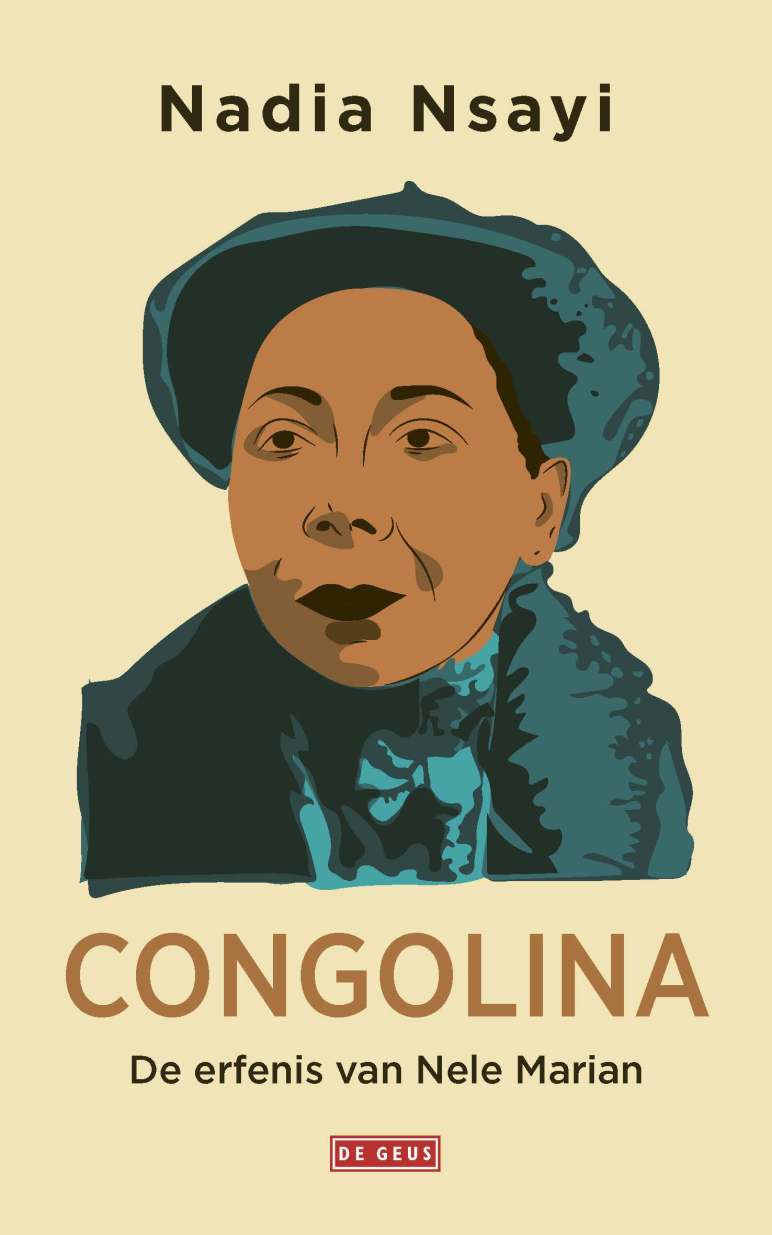




 Grâce Ndjako